The song editor
The song editor
Every control in the Lyric Genie song editor, what it does, and where it sits.
The song editor is where you actually write. Open any song and this is what you get: a title, a page for your lyrics, and a ring of tools around the edge that you can mostly ignore until you need them.
This page is the map. Each tool has its own page, linked from here.
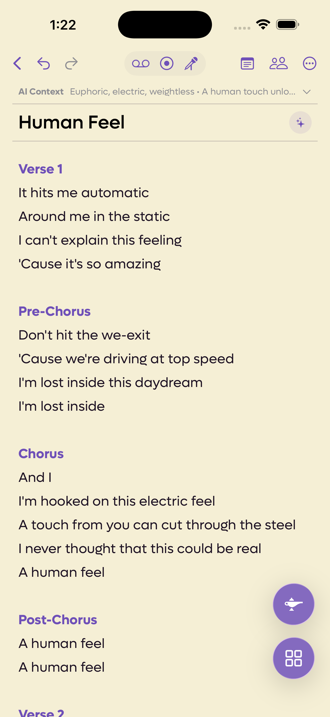 123456789
- 1Recordings: the audio already on this song
- 2Record: start a take now
- 3Freestyle: sing, and get lyrics back
- 4The Scratchpad, for lines that are not in the song yet
- 5Collaborators, for inviting co-writers
- 6Perform, Lyric Sheet, AI Style and Preferences hide here
- 7AI Context. Every writing tool reads this first
- 8The lamp opens Wish Workshop
- 9The grid opens Arrange mode
The toolbar#
Reading left to right.
| Control | What it does |
|---|---|
| Back | Returns to wherever you came from. Your work is already saved. |
| Undo and Redo | Step backwards and forwards through your edits. |
| Recordings | Opens the audio attached to this song. See Recordings. |
| Record | Starts recording straight away. |
| Freestyle | Opens Freestyle ready but not recording. |
| Scratchpad | Slides up a notepad that is not part of your lyrics. |
| Collaborators | Invites co-writers and manages who is on the song. |
| More | The menu described below. |
The three audio buttons sit together in a grey capsule because they are three answers to the same question. Record captures audio. Freestyle captures audio and turns it into lyrics. Recordings is where both end up.
AI Context#
The bar under the toolbar reads Add AI context... until you fill it in. Tap it and it opens three fields.
| Field | The question it is really asking |
|---|---|
| Mood | How is the song supposed to feel? |
| Theme | What happens in this song, in a sentence? |
| Similar Artists | Which artists inspire this song? |
This is the single highest-leverage thing on the screen. Every writing tool in the app reads these three fields before it suggests anything, so a song with them filled in gets noticeably better results than an empty one. The app knows it too: open Wish Workshop on a song with no context and it stops to ask you for some before it will continue.
Theme does the most work, and it rewards being specific. "Leaving home" is weaker than "she leaves the town that made her small".
The song title#
Type a title straight into it. The button beside it suggests titles based on what you have written, and you can page through the suggestions rather than taking the first one.
It stays greyed out until there are some lyrics to read, because a title suggestion with nothing to go on is just a random phrase.
The two floating buttons#
They sit over your lyrics at the bottom right, and they move. Press and drag either one up or down if it is covering a line you are working on.
The lamp opens Wish Workshop, which is the main AI writing tool. What it does depends on whether you have selected any text first. Select a line and it offers to change that line. Tap it with nothing selected and you get Creative Spark, which generates fresh material instead.
The grid opens Arrange mode, where you select whole lines and move, duplicate or delete them rather than editing text. Tap it again to leave.
The ⋯ menu#
| Item | What it does |
|---|---|
| Perform | Full-screen scrolling lyrics on a black background, for singing along. Greyed out until the song has lyrics. |
| Lyric Sheet | Creates a shareable web page of the finished lyrics with writer credits. |
| AI Style | Standing instructions for the AI, including words you never want it to use. |
| Preferences | App settings, including the serif lyric font and in-line suggestions. |
| Show Editor Tour | Replays the guided tour of this screen. Useful, and not buried in Settings. |
The Scratchpad#
The button slides up a ruled notepad from the bottom. It belongs to the song and it saves with the song, but it is not part of your lyrics, so nothing in it appears in a lyric sheet or in Perform.
Use it for the lines you are not sure about yet, rhyme lists, or a chorus you might come back to.
What changes on a shared song#
Invite a co-writer and the editor grows a few things.
- A row of tabs appears, one per writer, each in their own colour, plus a Master tab for the agreed version.
- A Mailbox button joins the toolbar, carrying a count when someone has sent you lines.
- Collaborators moves off the toolbar and into the ⋯ menu.
Collaboration has its own section of these docs, starting with Inviting a co-writer.