What you make
Songs
The document you write in, what you can do to one from the list, and what happens to a song you are finished with.
A song is the main document in Lyric Genie. It holds your lyrics, the context the writing tools read, any audio you attach, and, once it is shared, a tab for every writer on it.
What a song holds#
| Part | What it does |
|---|---|
| Title | Names the song everywhere it is listed. The editor can suggest one from your lyrics. |
| Lyrics | The main text, divided into sections by their headers. |
| AI Context | Mood, theme and similar artists. Every AI feature reads these. |
| Scratchpad | A private notepad that saves with the song but is not part of the lyrics. |
| Recordings | Audio attached to this song. See Recordings. |
| Collaborator tabs | One per writer on a shared song, plus Master. |
AI Context is the part people skip and then wonder why the suggestions are bland. It is three short fields, it takes a minute, and it changes the output of every AI feature in the app. The song wizard collects it by asking three questions.
Finding one#
The tab opens on All Songs, and the back arrow beside that title leads to the collections your songs are filed in. Both are covered on The Songs tab.
Sorting and selecting#
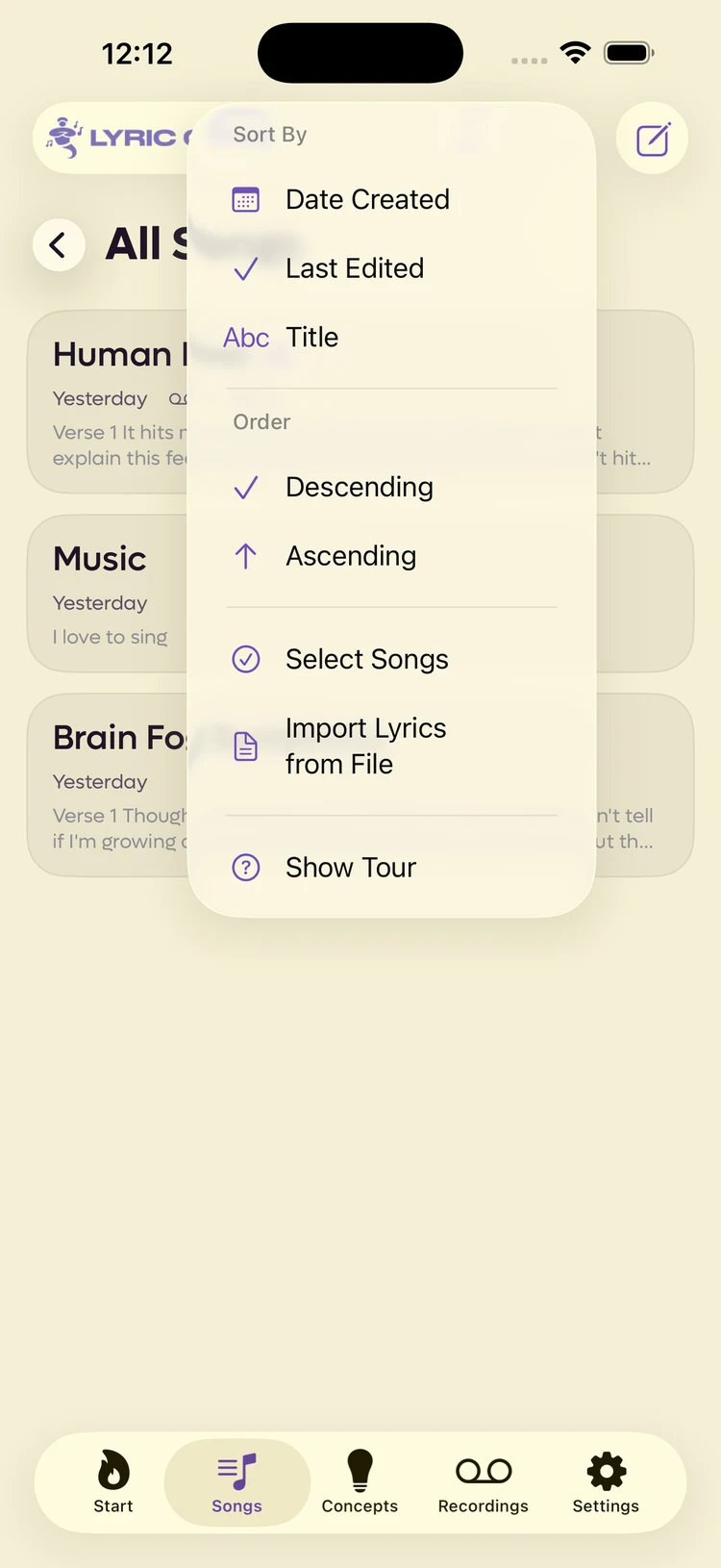
Inside a list, the ⋯ button sorts it and turns on multi-select.
 123
123
- 1Date created, last edited, or title
- 2Turns on checkboxes
- 3Lyrics you wrote somewhere else
Import Lyrics from File lives here rather than on the Start tab, which is where people look for it. See Importing files.
What you can do to a song#
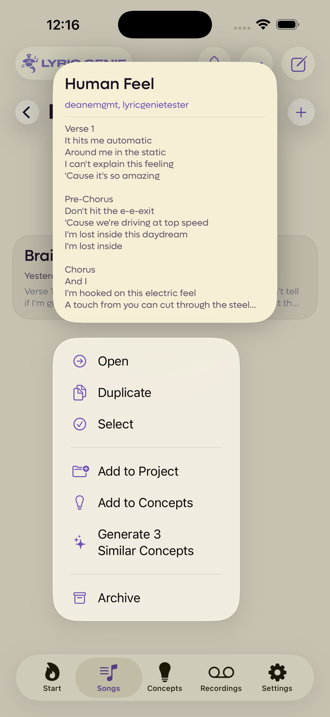
Press and hold any song in a list and the app shows you the lyrics, who is on it, and the things you can do.
 12
12
- 1The lyrics, without opening the song
- 2File it, or turn it back into an idea
Add to Concepts turns the song back into an idea. Generate 3 Similar Concepts reads it and proposes three adjacent ones. Both are covered on Concepts.
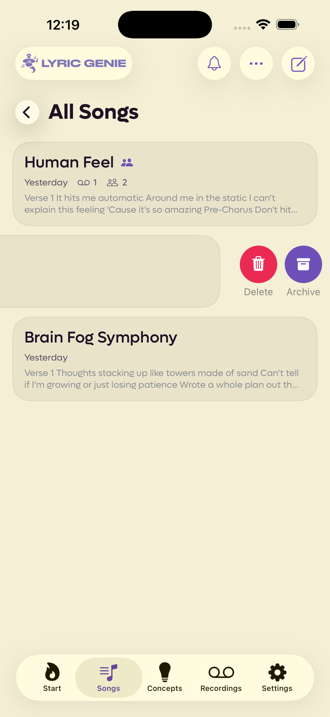
Swiping a song sideways gets to the same two destructive actions faster.
Archive, not delete#
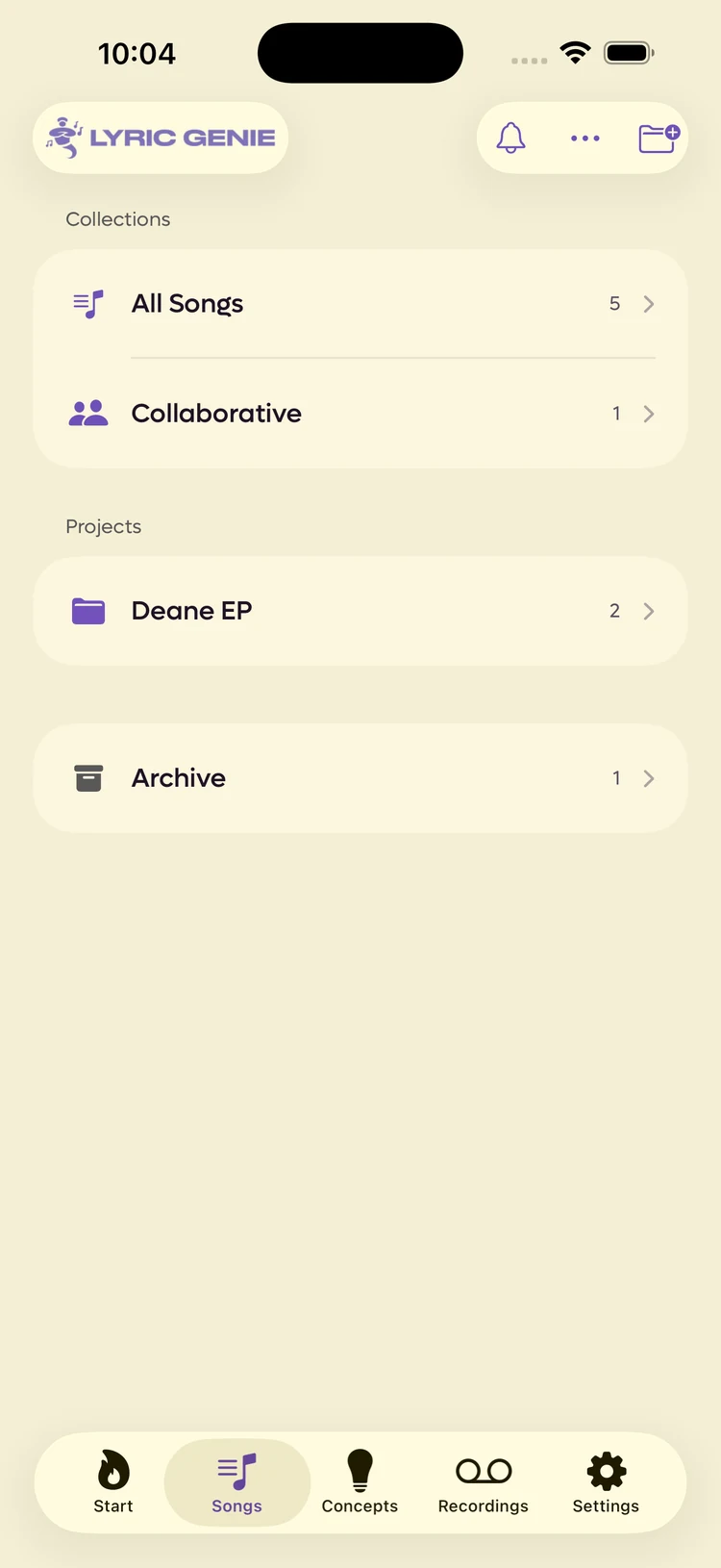
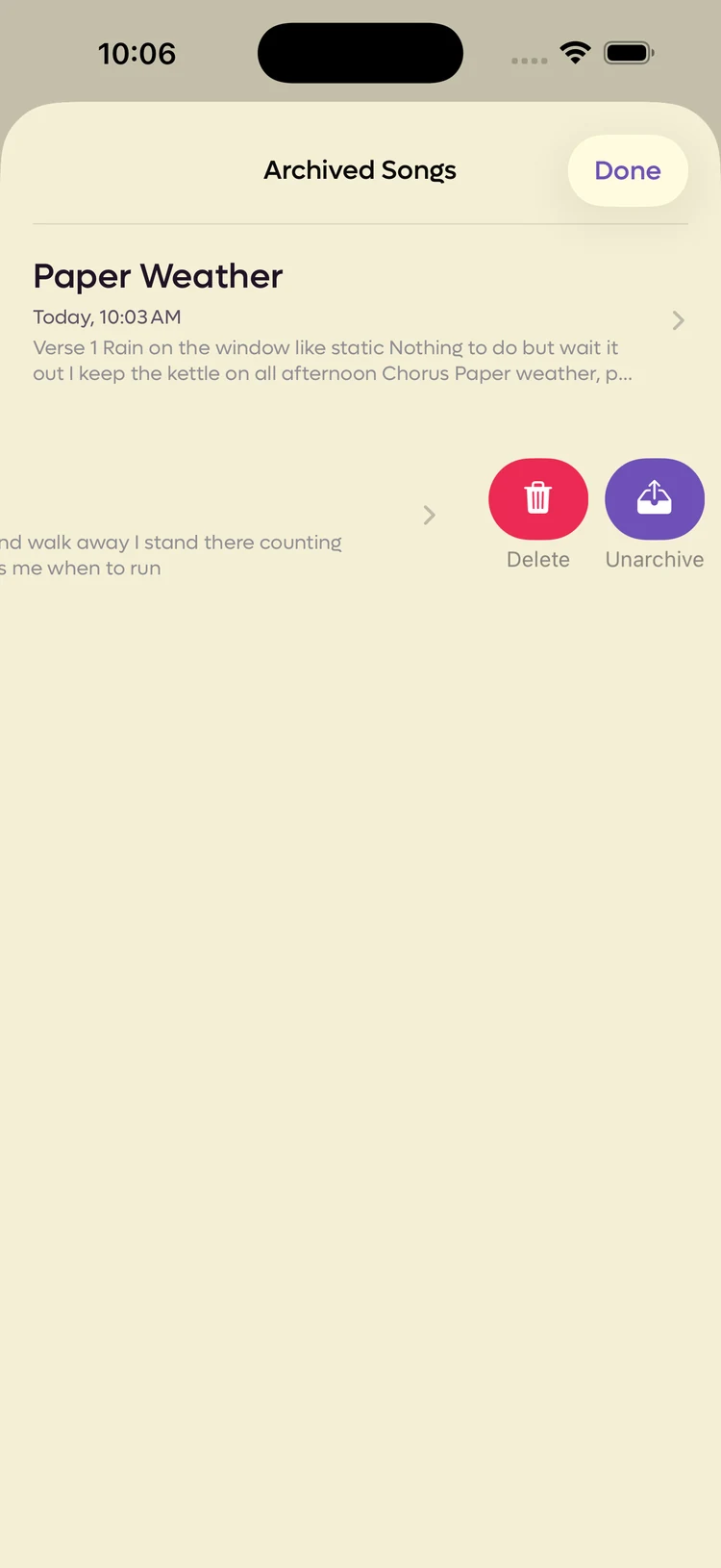
Archive takes a song out of All Songs without destroying anything. An Archive row then appears at the bottom of the collections screen, and the song is in it, with its lyrics, its recordings and its collaborators intact.
 1
1
- 1Only here once you have archived something
The songs inside keep everything. Swiping one sideways offers the way back.
 1
1
- 1One tap puts it back in All Songs
Delete is permanent, and it takes the song's attached recordings with it.
Selecting several at once#
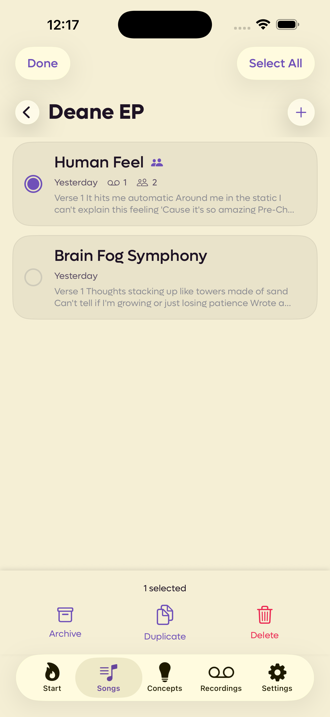
Select Songs in the ⋯ menu puts a checkbox on every row and a bar along the bottom.
 1
1
- 1Applies to everything ticked
Making a song#
Four ways, and they all end in the same editor.
| From | What you get |
|---|---|
| Write on the Start tab | A guided start or a blank page. See The song wizard. |
| Freestyle | Sing or speak first, lyrics after. See Freestyle. |
| A concept | The concept's title, mood, theme and artists carried across. |
| An unattached recording | A new song with that audio already on it. |
Whichever you use, the song appears in All Songs and in Latest Songs on the Start tab.